
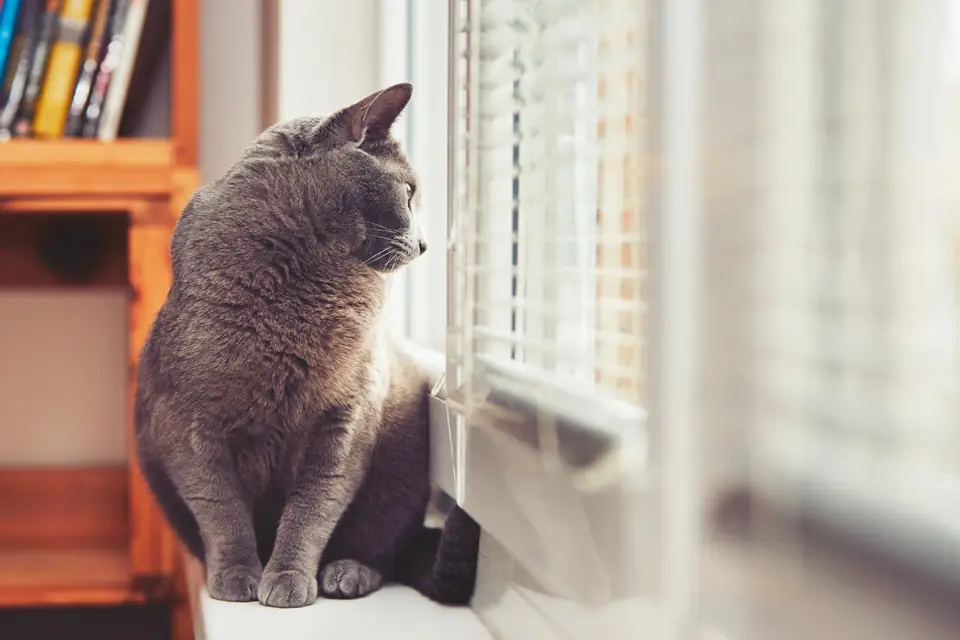
Height is one of the basic comforts for a cat, and the tower is how a boarding facility provides it.
Why cats like towers
Cats feel safer when they can see from above and retreat out of sight. The AAFP and ISFM environment guidelines list safe places, hiding spots and climbing opportunities among the core needs of a pet cat. A tower stacks several of those into one footprint: a top perch to survey, middle levels to nap and a lower level for food and the box.
Tower and condo in the rate sheet
The 2026 rate sheet prices cat boarding as a condo, $35 a night for one cat and $30 for each additional cat sharing a condo. Cat day care uses the word tower: $25 for one cat and $21 for each additional cat sharing a tower. The two words describe the same four-level unit.
What goes with it
Each cat has a litter box of his own and a blanket. A larger cat tree and cat houses are available for play and hiding. The staff will tell you how your cat uses the levels if you ask at pick-up. Bring a familiar blanket if your cat likes his own smell, and the usual food in the original bag.
In California law
State law says a permanent enclosure for a cat has to include an elevated platform, appropriate to the cat's size. A tower with several levels goes beyond that simple minimum. For more, read cat condos and towers and the cattery entry.
Tower versus cat tree
A boarding tower is a unit assigned to one cat, with its levels, litter box and blanket. A cat tree is a freestanding climbing frame used for play, and cat houses are small hideaways. The cattery has both, so a cat can move from resting in the tower to climbing the tree. Owners sometimes ask whether a tall unit is hard for older cats. Lower levels give a stiff cat an easier option, and the staff can tell you how your cat is using the space.