
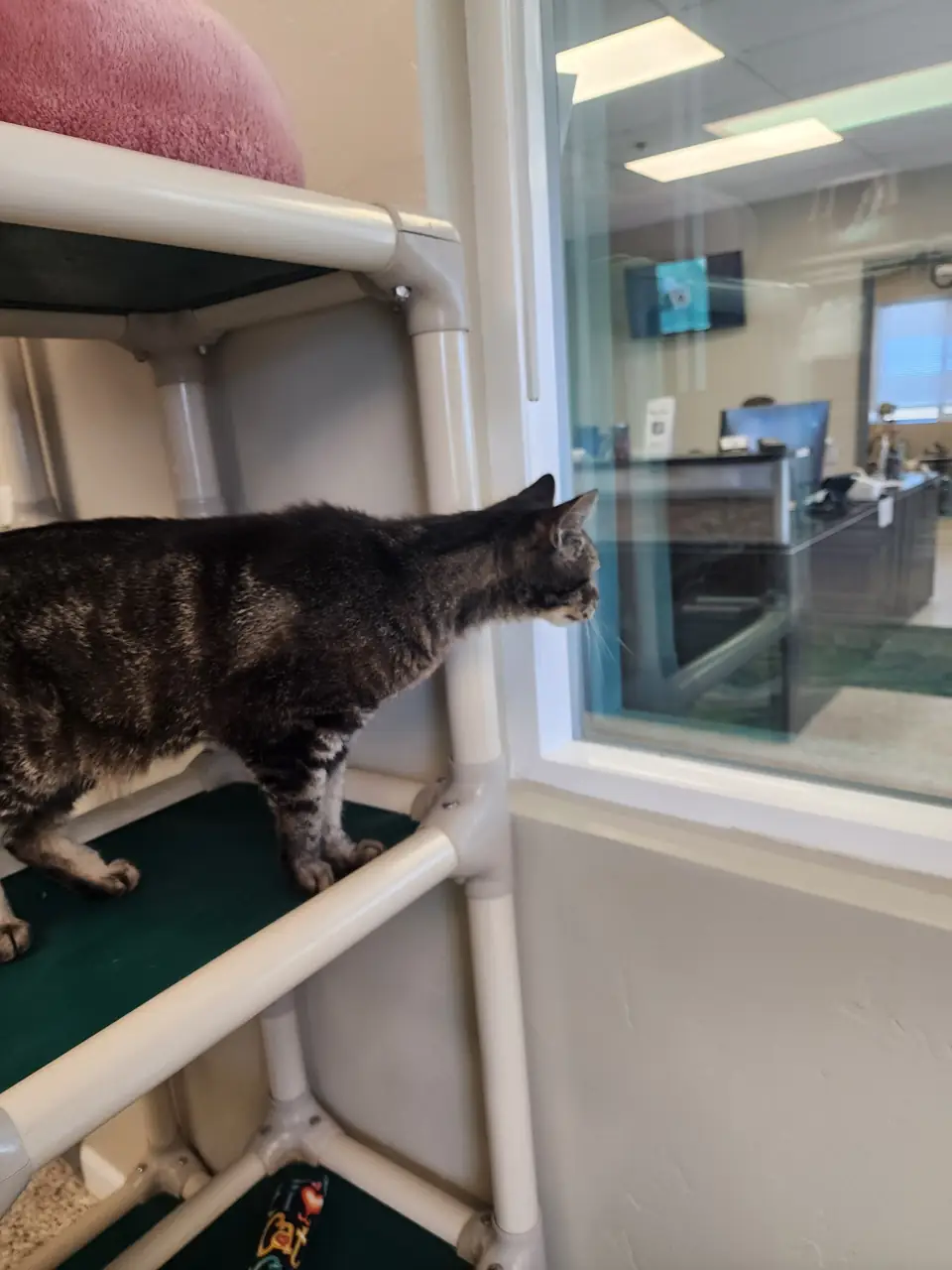
Owners often ask whether a condo is just a cage. The answer is in the layout: height, hiding places and separate spots for resting and using the box.
Why height matters to cats
The AAFP and ISFM guidelines on cat environments stress that cats need to climb and perch, and need places to retreat. Cats use vertical space to feel safe and to watch what goes on. California's pet boarding law agrees on the basic need: a permanent enclosure for a cat must provide an elevated platform appropriate for the cat's size.
What is in each space
Each cat at Happy Paws has an individual four-level tower, which the rate sheet calls a condo. Each cat gets its own litter box and a blanket. A cat tree and cat houses are available for play and hiding. Two or more cats from the same household can share a condo, and each additional cat pays $30 a night on the 2026 rates. A single cat pays $35 a night.
Condo, tower or room?
The rate sheet uses both words. A tower is the climbing structure, while a condo is the boarding unit for a cat. For a cat that wants more variety, play time with the cat tree and houses is part of the cattery setup. Cats that love to climb will use the top, while older cats may stay on the lower levels. Watch your own cat at home to guess which he will pick.
Preparing your cat
Bring a blanket that smells like home, and keep other items to a minimum. The litter box and a blanket are provided. If your cat has a favorite perch height at home, tell the staff. Check-out is by 11:30 AM, with half the nightly fee for afternoon pick-up. For more on the sort of place a cat does well in, see what is a cattery and boarding two cats together.
Questions to ask on a tour
Ask to see the tower from your cat's point of view: how high the top level sits, where the litter box is placed, where the blanket goes and how a cat reaches each level. Notice whether the spaces are quiet and clean. If your cat is older or stiff, ask which levels are easiest to use. Staff walk with you on every tour, so you can ask as you go.