
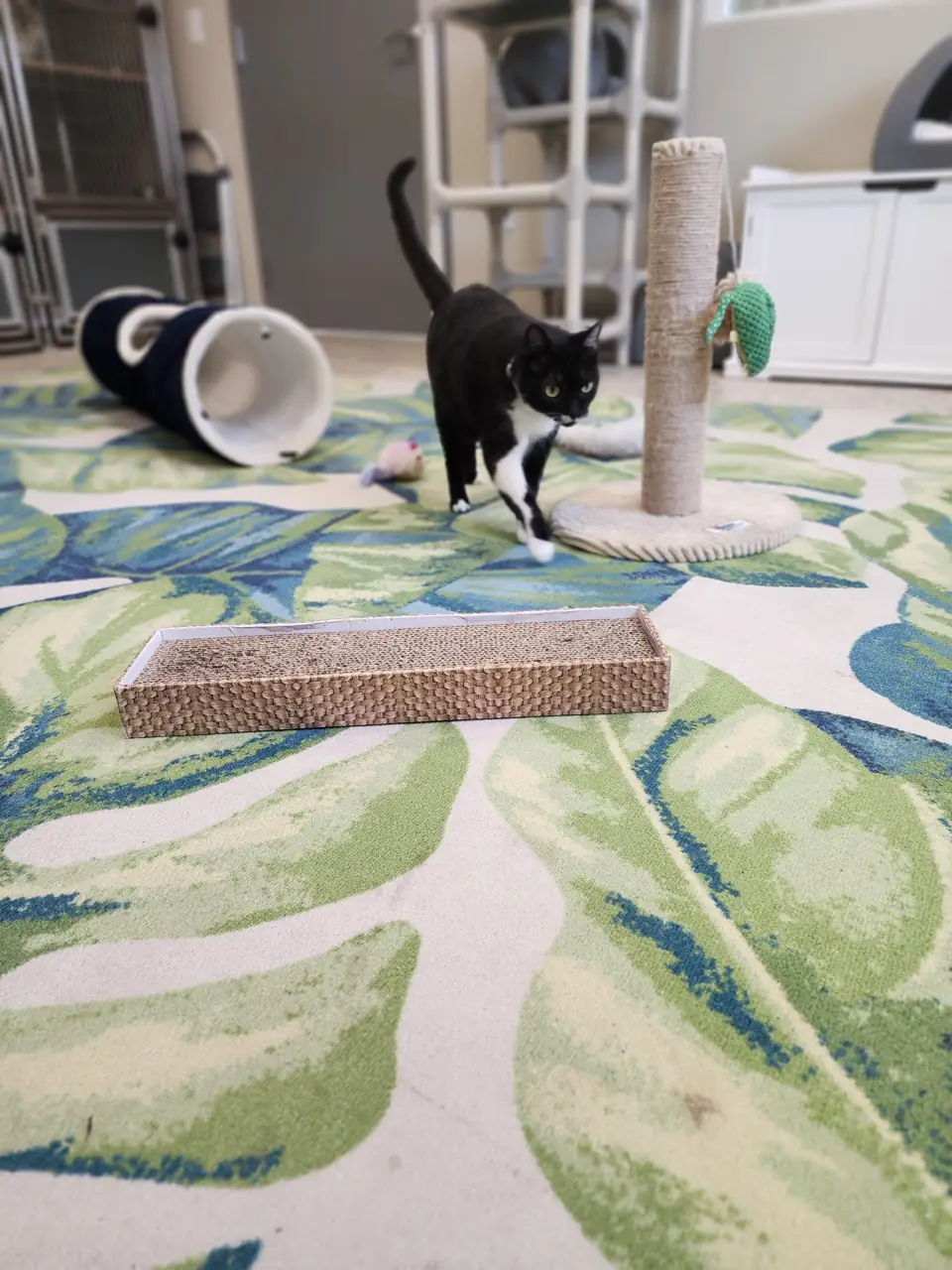
The word covers anything from a breeder's cat house to a large boarding building. For a family going away, it simply means a place where a cat is housed and cared for.
What defines one
A cattery houses cats apart from dogs and builds around feline habits: height to climb, a spot to hide, a litter box and quiet. The AAFP and International Society of Feline Medicine environment guidelines describe those needs. California adds a rule for any boarding facility: a permanent enclosure for a cat must include an elevated platform suited to the cat's size.
The Happy Paws version
The cattery sits in the front building beside the lobby. Each cat gets an individual tower, which the rate sheet calls a condo. A cat tree and cat houses give room to play and hide. Cats need rabies and FVRCP vaccines, must be 16 weeks or older, and may bring their own food or eat the free house food of canned pate and chicken-and-rice kibble.
Rates and terms
One cat is $35 a night and each additional cat sharing a condo is $30 on the 2026 rates; cat day care is $25 for one cat. Check-out is by 11:30 AM and afternoon pick-up adds half a night. Medications are given at no extra charge. The full explanation is in the what is a cattery guide.
Related terms
See cat tower for the unit itself, and cat boarding for the service. Not every facility that takes cats has a separate cattery, so ask where cats are housed when you tour.
Questions a cat owner can ask
Ask how cats are fed, how often they are checked, how the litter boxes are cleaned and how an illness would be handled. California's boarding law expects written policies on care and disease control, and requires observation of each pet at least once every 24 hours. Ask whether you can bring a blanket, and what time of day suits your cat's drop-off. At Happy Paws the staff will explain the setup at the door, and a tour of the cattery is free and needs no booking.