
Cats are particular about food, and a change of diet in a new place can upset a stomach. Knowing the house menu ahead of time lets you decide whether to bring your own.
The house menu
The cattery serves canned pate and a chicken-and-rice dry kibble. Both are included in the nightly rate of $35 for one cat on the 2026 rates, so there is no meal charge to add.
When to bring your own
If your cat eats a prescription diet, a single flavor or a brand with a particular texture, bring it. Pack it in the original bag or can, enough for the whole stay plus a bit extra, and write the amount in cups, tablespoons or cans on the pet information page. Own food is welcome at no charge.
Tell the staff what matters
The agreement asks for feeding times, the amount, whether you supply the food, any special feeding instructions and allergies for each pet. A cat with a sensitive stomach should have those lines filled in completely.
Appetite in a new place
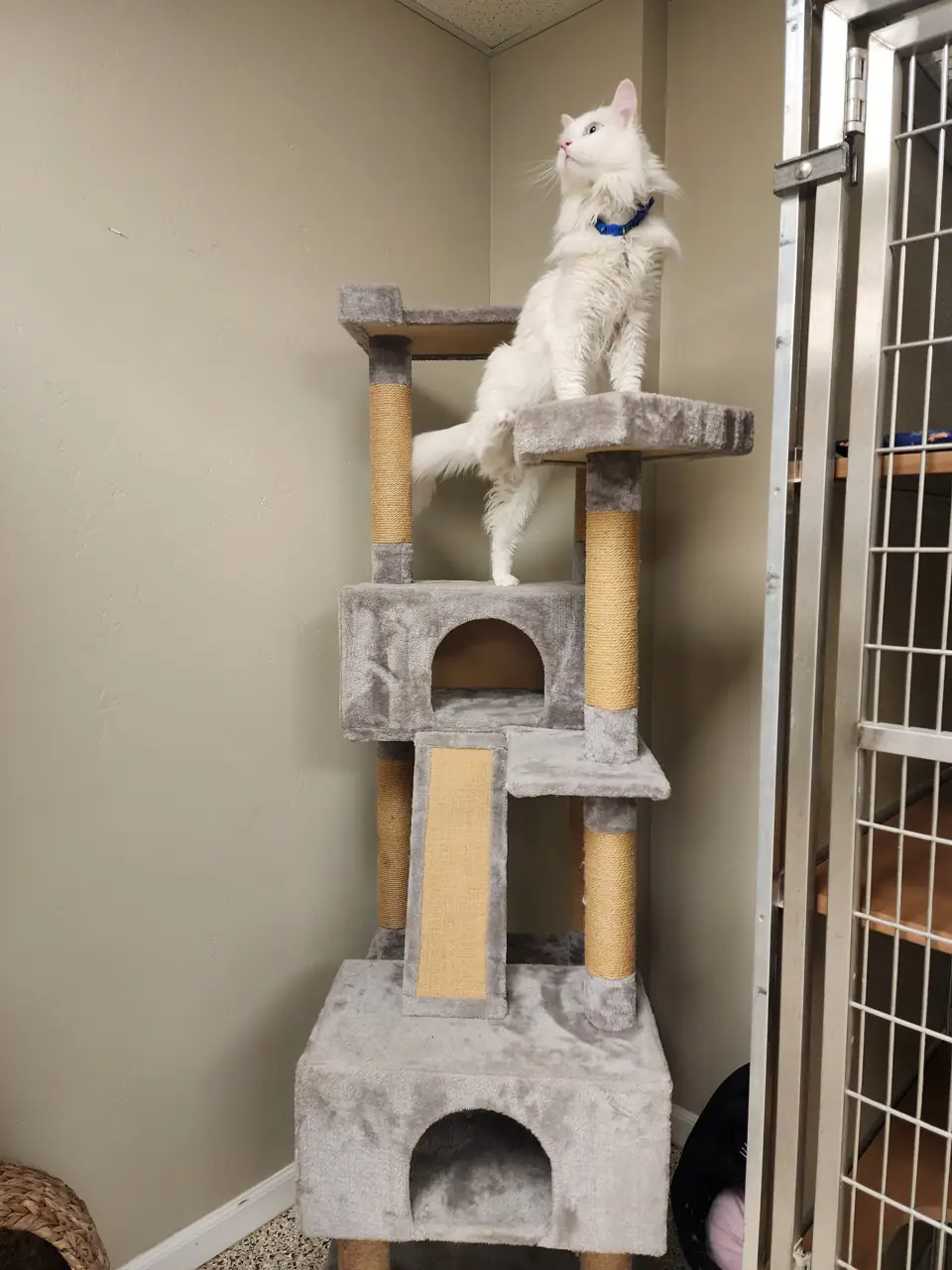
Some pets skip a meal or two when they first arrive. A cat who is nervous often settles after the first day in an individual tower with its own litter box and blanket. Write down how your cat usually eats, whether in small portions through the day or in two meals, so the staff can match the routine.
Sharing a condo
Cats from one household can share a tower, and the second cat costs $30 a night on the 2026 rates. Each cat still eats from its own plan, so list both on the form. See cat boarding for how the cattery works.