
Shy cats are not harder to board, they just need the room to do the work for them. Most of the preparation happens at home in the week before the trip.
Why hiding matters to a cat
The AAFP and ISFM environmental needs guidelines list a safe place as the first of five pillars of a healthy cat environment. A cat that cannot get out of view tends to stay on alert, and an alert cat often skips meals and avoids the litter box. Raised spaces help too, because a cat that can look down on a room feels more in control of it.
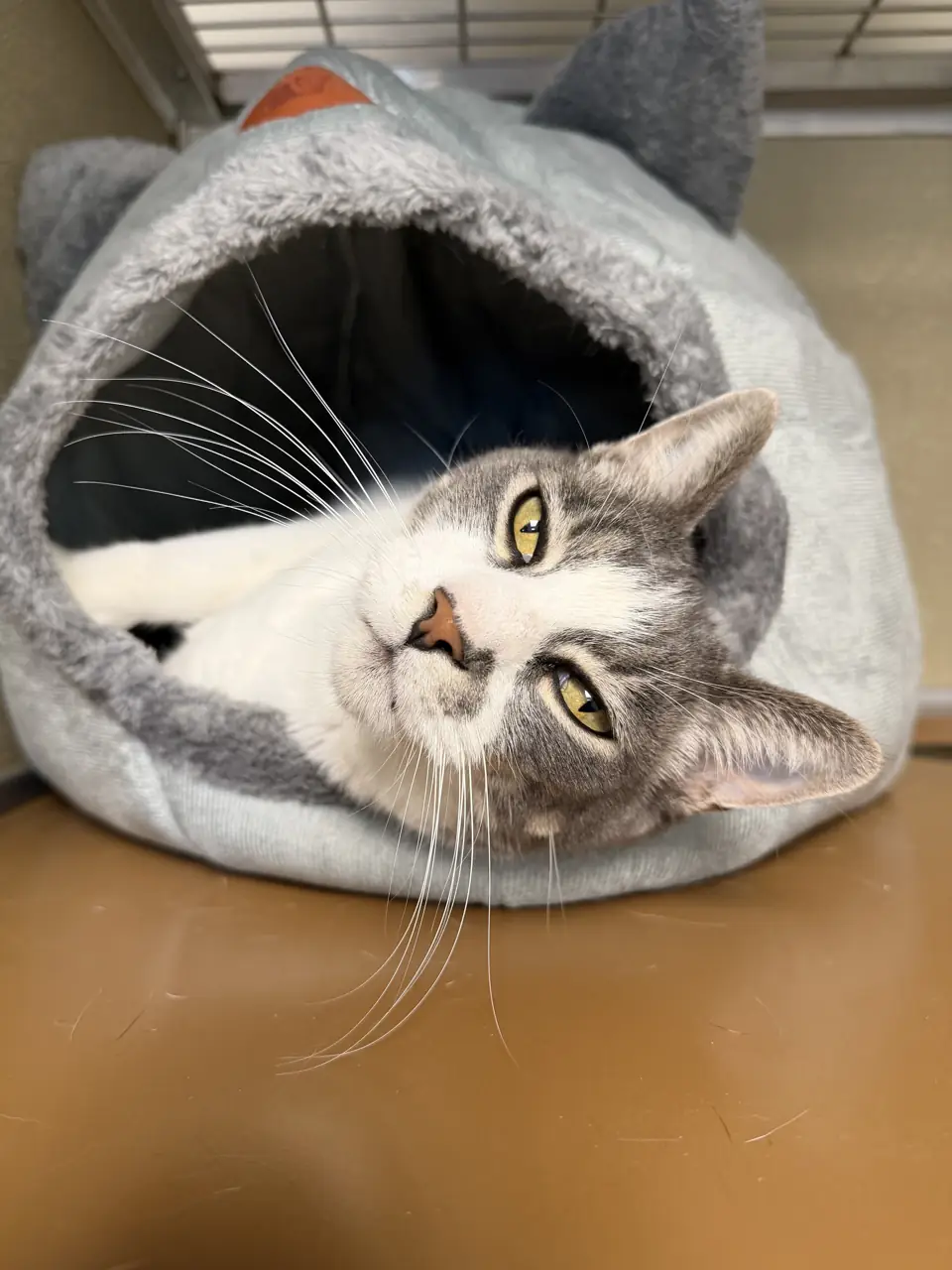
That is the thinking behind the cat tower. Each Happy Paws guest has an individual four-level condo, so there is a level to retreat to and a level to watch from, with its own litter box and blanket. The cattery also has a cat tree and cat houses.
Preparing a shy cat at home
- Leave the carrier out for a few days with a worn T-shirt or blanket inside, as the AAHA and Cat Friendly carrier guidance suggests, so it smells normal on trip day.
- Pack the blanket or shirt that smells like you. It is the one item worth sending, along with the food in its original bag.
- Tell the staff at drop-off what your cat does when nervous: freezes, hides, hisses or bolts. Short notes help.
- Keep the goodbye short and quiet. Long, emotional goodbyes are harder on a shy cat than on you.
What the first day can look like
Many cats spend the first day or two mostly hidden and eat little. That is common and not a sign the stay is failing. Your cat's own food from home is welcome at no charge, and so are medications.
Not sure what you are seeing? The guide to signs of stress in cats separates the normal from the worth-a-call.
A tour helps you and your cat
Tours run every day from 9 to 11 AM and 2 to 4 PM with no appointment, and a staff member walks with you. Seeing the condos and the cat houses first often settles the owner, which settles the drop-off. A condo is $35 a night on the 2026 rates.